Overview:
- Low-outgassing, single-component thixotropic adhesive similar to NEA 123
- Cures in seconds under UV to a tack-free, tough, flexible polymer
- Lower post-cure outgassing than NEA123; higher tensile strength, modulus, hardness and resistivity
- Applications: wire tacking, chip capacitor positioning, coil lead termination, HGA bonding, etc.


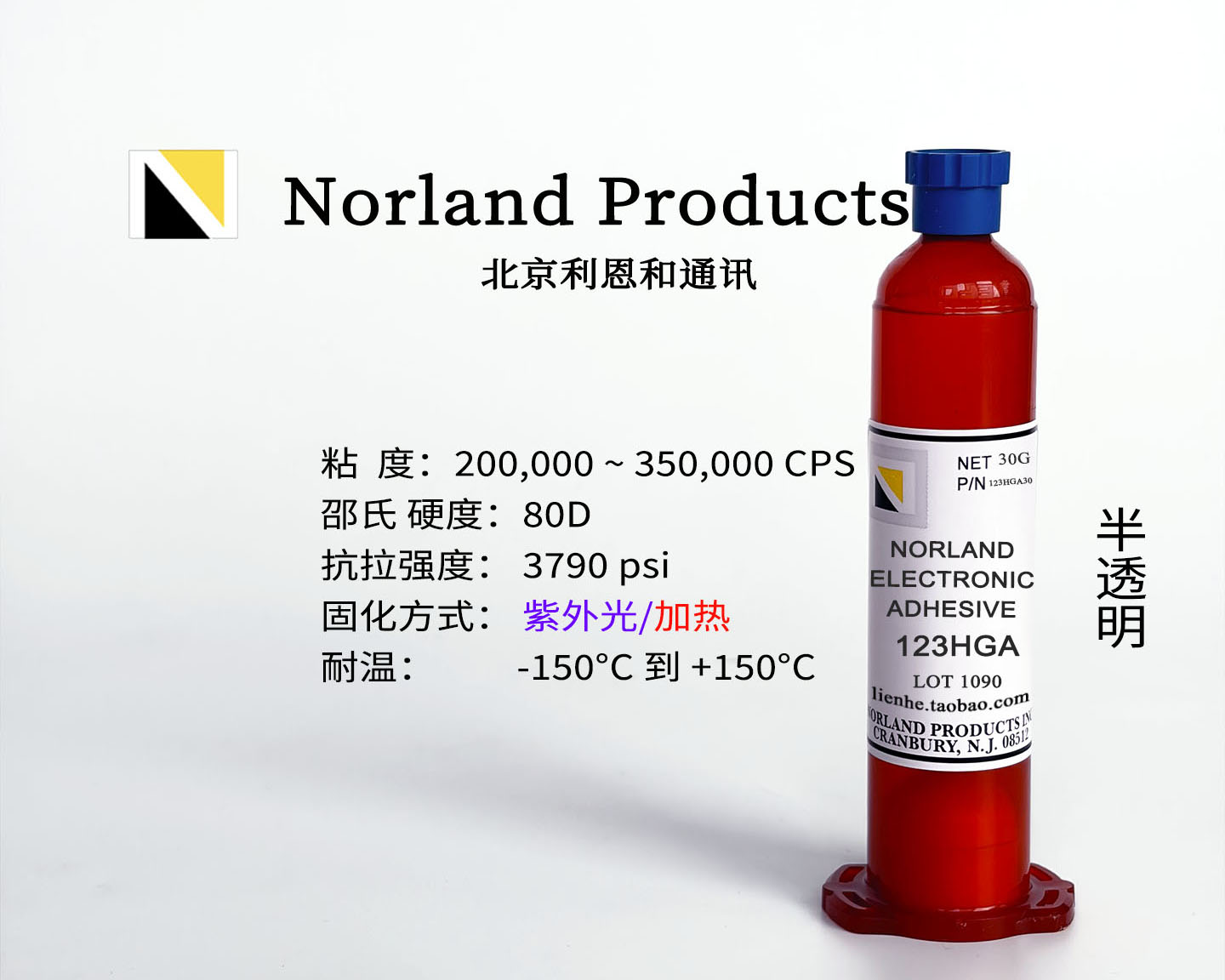
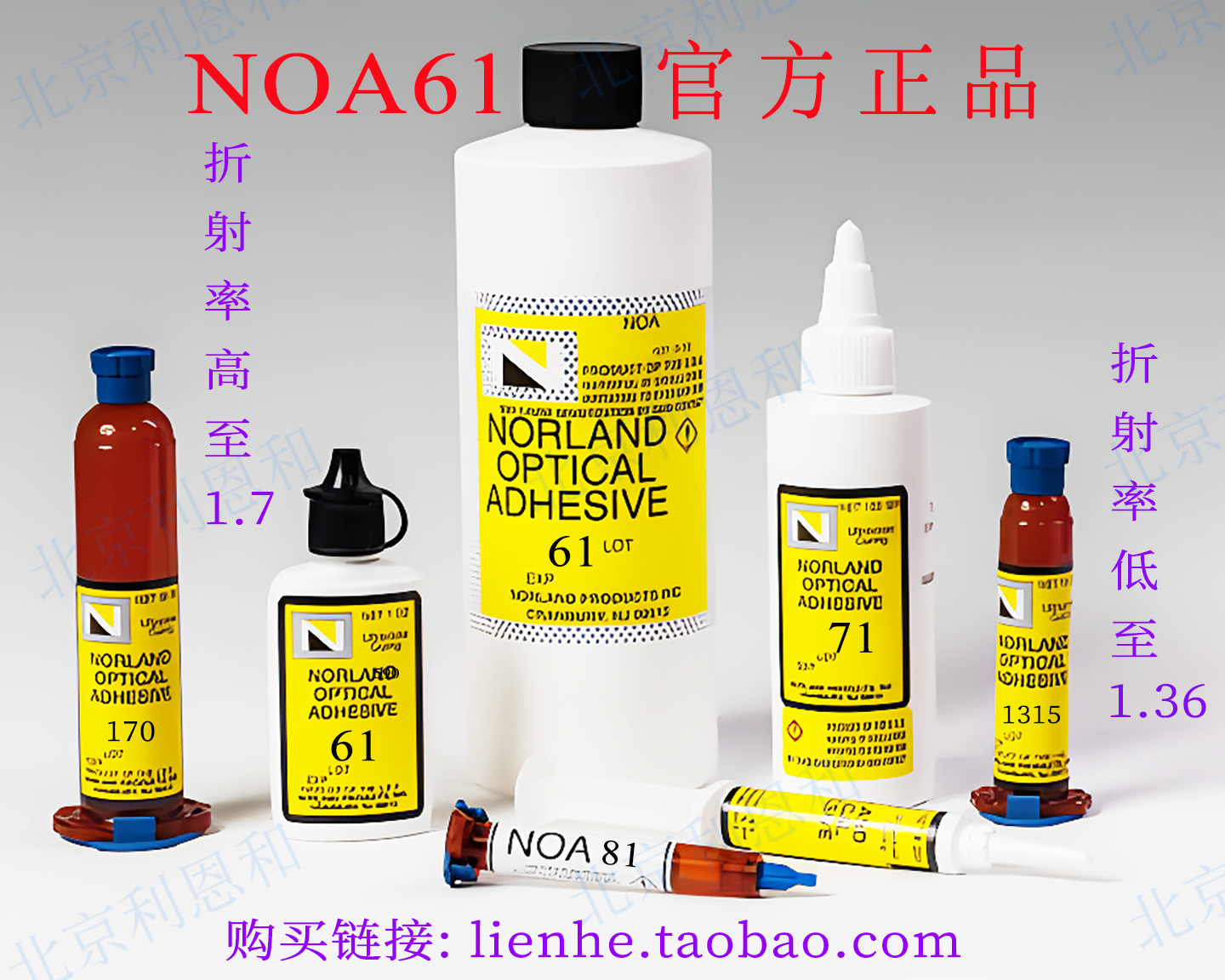
NEA123HGA Standard packaging - 1 oz bottle, for lab and small-batch production
NEA123HGA is a low-outgassing, single-component thixotropic adhesive similar to NEA 123 . It cures in seconds under UV to a tack-free, tough, flexible polymer. Post-cure outgassing is lower than NEA123; NEA 123HGA has higher tensile strength, modulus, hardness and resistivity than standard NEA 123. Elongation is lower; other properties are comparable. Ideal for fast tacking, filling, sealing and bonding of components or wires. A drop forms a bridge between component/wire and substrate; UV exposure cures instantly and locks the part. NEA 123HGA applications include wire tacking, chip capacitor positioning, coil lead termination, and HGA bonding, and tamper-proofing of adjustable components. Sensitive to 320-390nm UV-A, peak at 365nm; full cure requires ~6 J/cm². Besides UV cure, Norland 123HGA contains a latent thermal catalyst for shadowed areas: 125°C/10 min or 80°C/3 h in a convection oven. Below 60°C no significant activation occurs. Thermal cure is unnecessary if all adhesive receives adequate UV. Heating already UV-cured parts is redundant but harmless and usually reduces outgassing. At 125°C oxygen inhibition is not an issue, but near 80°C air-exposed surfaces may remain tacky. A nitrogen atmosphere enables tack-free low-temperature cure. Below 70°C cure is not practical. Both UV and thermal cure are exothermic; allow samples to return to room temperature before testing. Excellent adhesion to glass, silica, stainless steel, aluminum, copper and common metals. Fair to good adhesion to polypropylene, polycarbonate, vinyl and acetal (DuPont Delrin).
Technical Specifications:
| Viscosity @ 25°C | 200,000 ~ 350,000 cps |
|---|---|
| Elongation at Break | 25% |
| Modulus (psi) | 321,000 |
| Tensile Strength (psi) | 3,790 |
| Shore D Hardness | 80 |
| Dielectric Constant (1MHz) | 3.852 |
| Dissipation Factor (1MHz) | 0.04 |
| Dielectric Strength (volts/mil) | 814 |
| Volume Resistivity (ohm/cm) | 1.7×10¹⁵ |
| Surface Resistivity (ohms) | 1.0×10¹⁵ |
| Arc Resistance (sec) | 100 |