Product Description:
- Bonds achromatic lenses, prisms and various precision optical components
- Low fluorescence, excellent light transmission near UV
- Suitable for biomedical applications
- Bonds glass to metal; suitable for thick bond lines
- Low shrinkage, slightly flexible, very low stress
- Suitable for temporary bonding, easy to remove
- Withstands a -15°C to +60°C temperature range
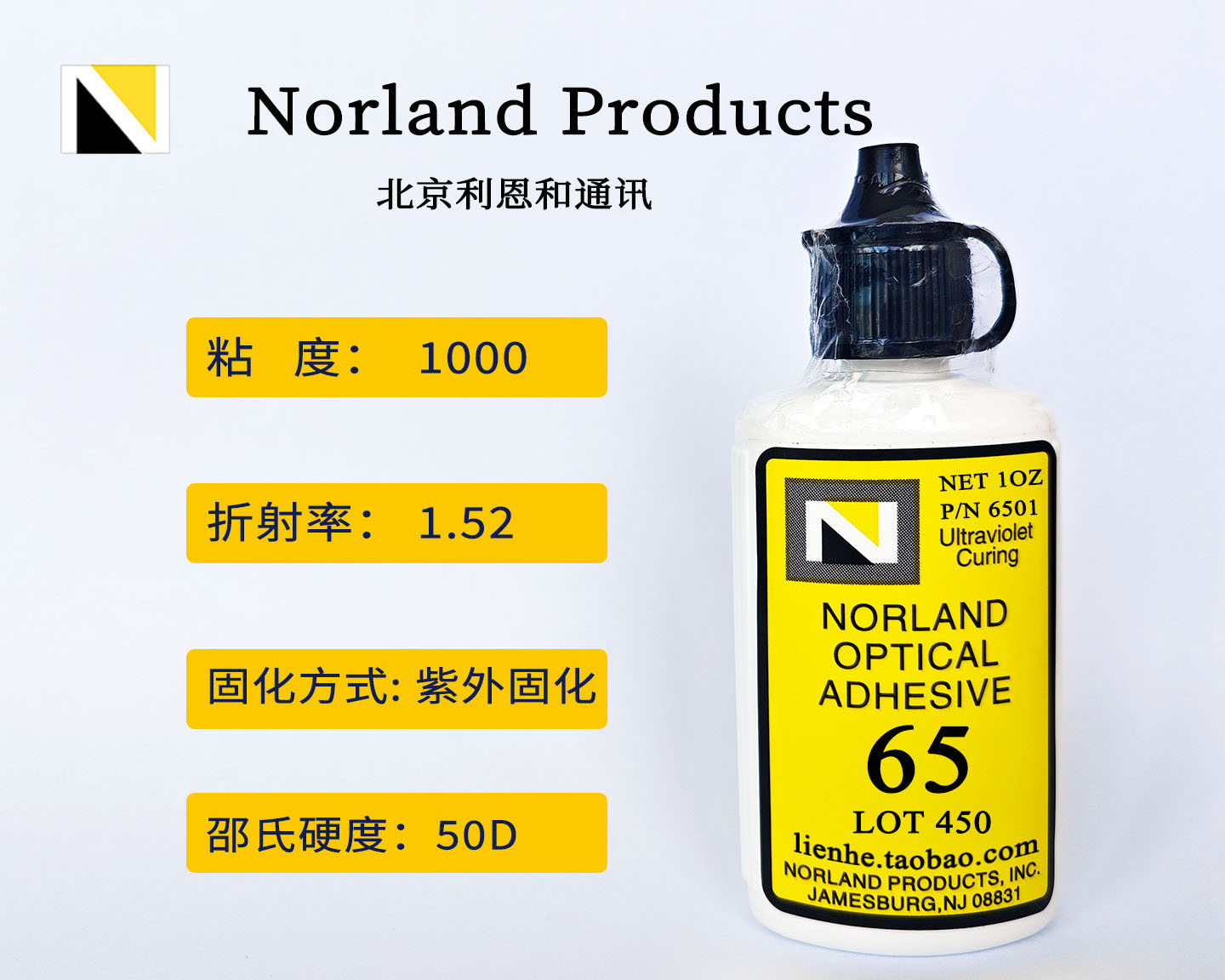
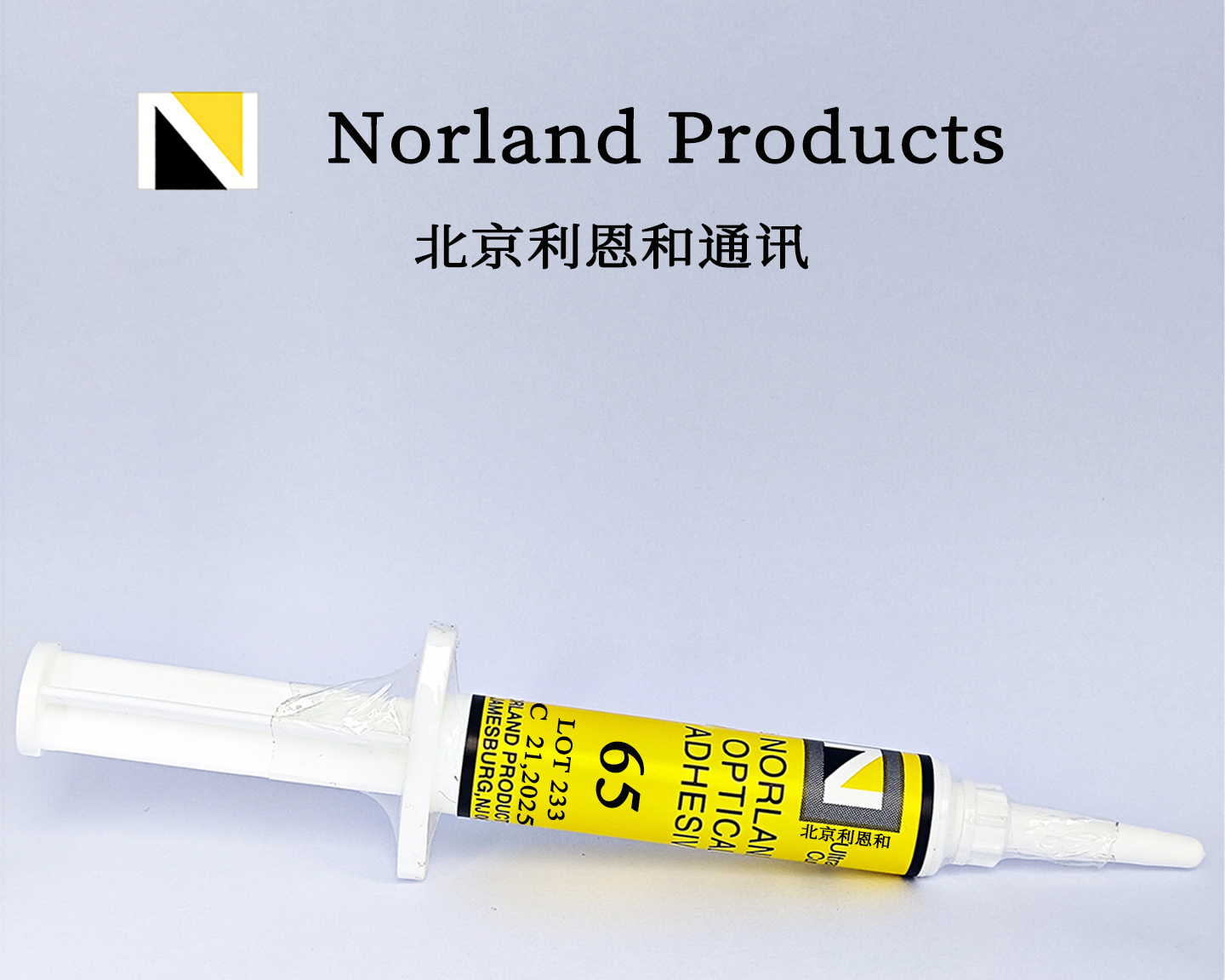
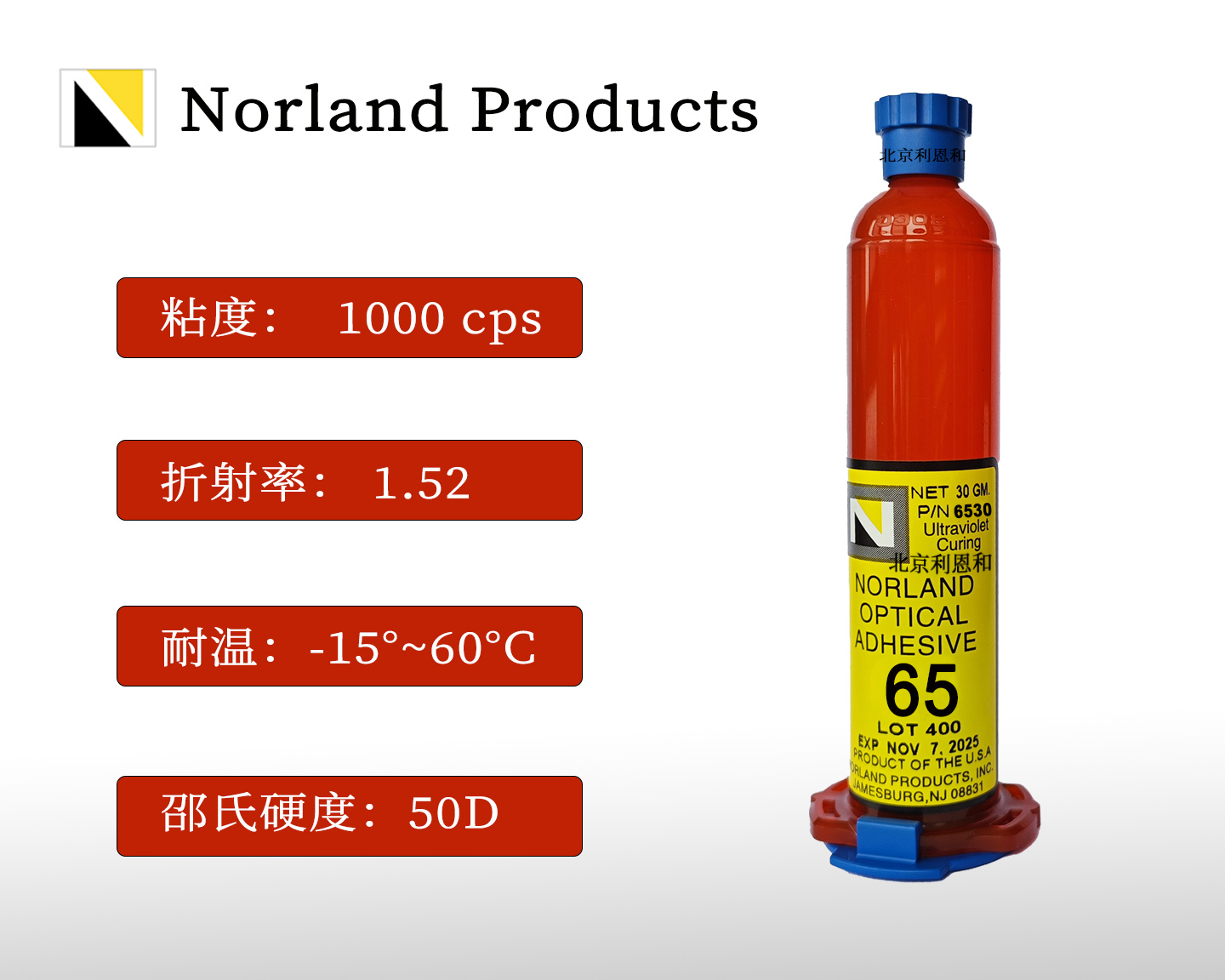
NOA65 Standard Packaging - 1-oz bottle, for laboratory and small-scale production
Norland UV-curing optical adhesive NOA65 is a transparent, colorless liquid photopolymer that cures under UV light. Because it is a one-component, 100% solids adhesive, it offers many outstanding advantages for bonding optical components as long as the bond line can be exposed to UV light. Using NOA65 eliminates the premixing, drying or thermal curing steps typically required by other optical bonding systems. Curing is fast, depending on the bond thickness and the UV energy applied. The cured adhesive is very flexible, keeping stress very low. UV adhesive NOA65 is suited to relatively thick bond lines. It is flexible enough to keep stress low when bonding materials with different coefficients of thermal expansion. Typical applications include bonding lenses to metal frames, bonding plastic to glass, and optical cold working. Another application is as an essential additive in producing polymer-dispersed liquid crystal (PDLC) and switchable glass.UV adhesive NOA65 cures under UV light and is very sensitive to 350nm-380nm UV. The recommended energy for full cure is 4.5 joules/cm² of long-wave UV. Since curing does not rely on an anaerobic reaction, areas exposed to air will become tack-free with sufficient UV exposure.During pre-curing, excess adhesive can be removed with acetone. After full cure, it can be separated by soaking in methylene chloride. Other light sources can also be used for curing, such as sunlight, mercury lamps and fluorescent black lights.
Technical Specifications:
| Solids | 100% |
|---|---|
| Viscosity at 25°C | 900-1000 cps |
| Refractive Index (cured) | 1.524 |
| Elongation at Break | 80% |
| Modulus (psi) | 20,000 |
| Tensile Strength (psi) | 1500 |
| Hardness - Shore D | 50 |
| Temperature Range | -15 to 60°C |
Light Transmission:

Storage Conditions:
Store in the original container, protected from light, at low temperature (5-22°C), for up to 6 months. If refrigerated, allow the adhesive to warm to room temperature before use. Handle this material with care; read the Material Safety Data Sheet first, along with related product information such as for alcohol, acetone or methylene chloride. Avoid prolonged skin contact; wash affected areas thoroughly with soap and water. If adhesive splashes into the eyes, rinse immediately with water for 15 minutes and seek medical attention. Use this product only in well-ventilated areas; otherwise, an organic-vapor respirator meeting NIOSH requirements is recommended.
Did You Know:
Polymer-Dispersed Liquid Crystal (PDLC):
PDLC stands for Polymer Dispersed Liquid Crystal. PDLC is made by mixing low-molecular-weight liquid crystals (LC) with a prepolymer; under certain conditions the mixture polymerizes into micron-scale LC droplets uniformly dispersed in a polymer network. Using the dielectric anisotropy of the LC molecules, the resulting material exhibits electro-optic response, switching mainly between a scattering state and a transparent state with various gray levels. PDLC film combines liquid crystal and polymer into a film material with excellent overall performance, and the LC molecules give the film good electro-optic properties. Compared with conventional displays, PDLC displays offer many advantages, such as no need for polarizers or alignment layers, simple fabrication, and easy large-area flexible displays. They are now widely used in optical modulators, thermal- and pressure-sensitive devices, switchable glass, light valves, projection displays and e-readers. UV adhesive NOA65 is highly compatible with liquid crystals, offers good optical transmittance and remains flexible after curing, so it is widely used in producing PDLC, especially PDLC films.
PDLC switchable glass example:
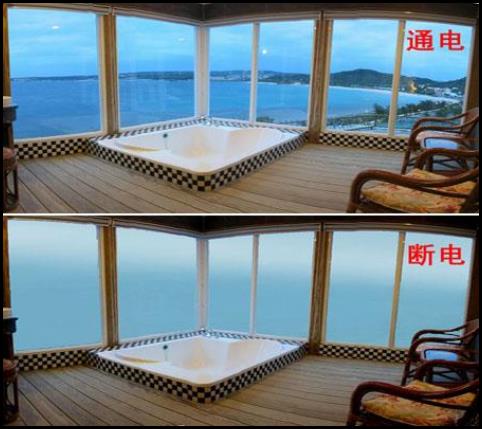
PDLC switchable glass is essentially a PDLC switchable film sandwiched between two glass panels. Taking advantage of the film being transparent when powered and frosted when off, it is widely used for privacy in commercial interiors, hotel decoration and projection displays.
Specific application examples of NOA65 UV-curing adhesive: