Product Description:
- For fast, precise bonding of optical components
- Contains a thermal catalyst for fast heat-cure in areas not reached by UV light
- Withstands temperatures from -150°C to +150°C after aging
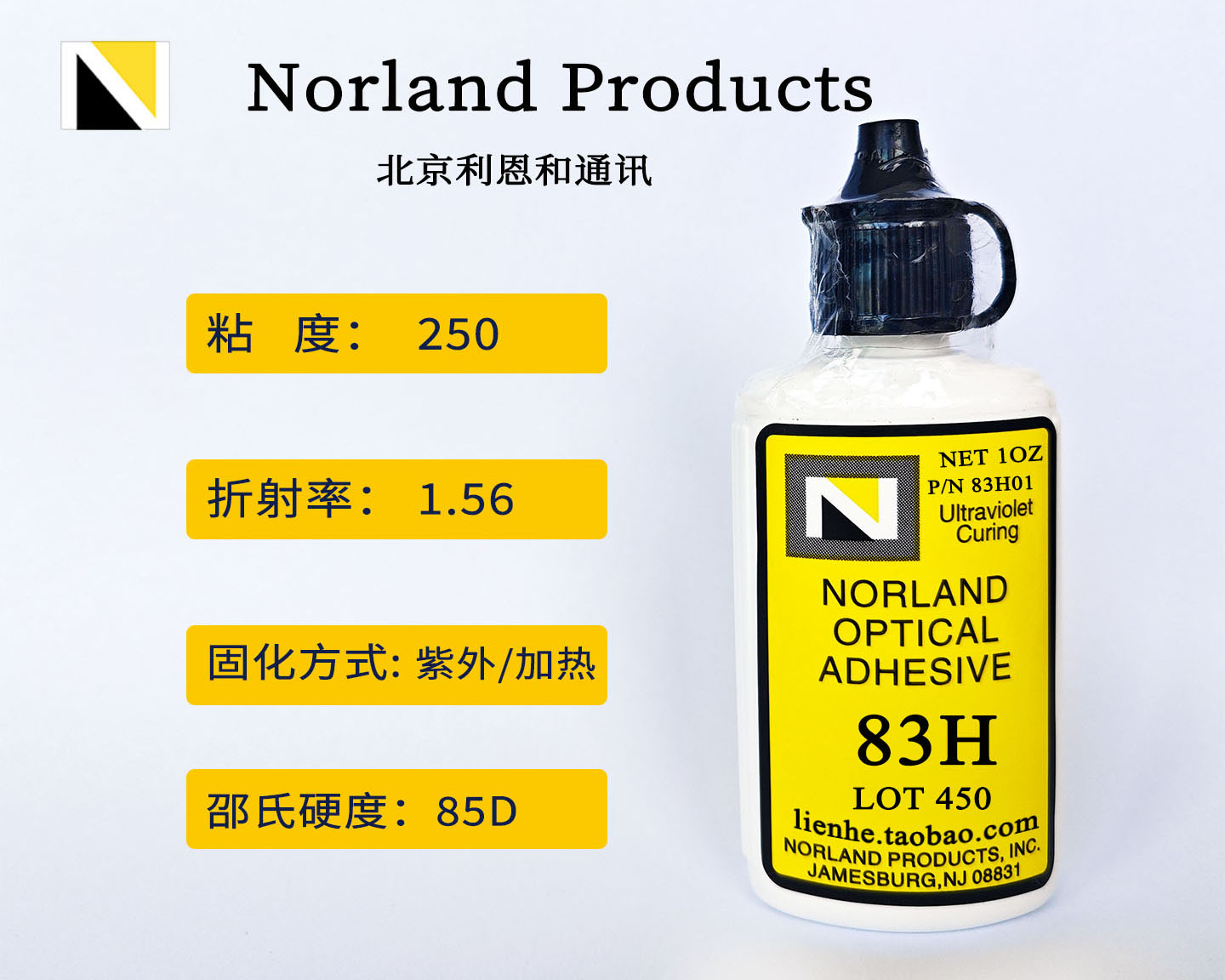

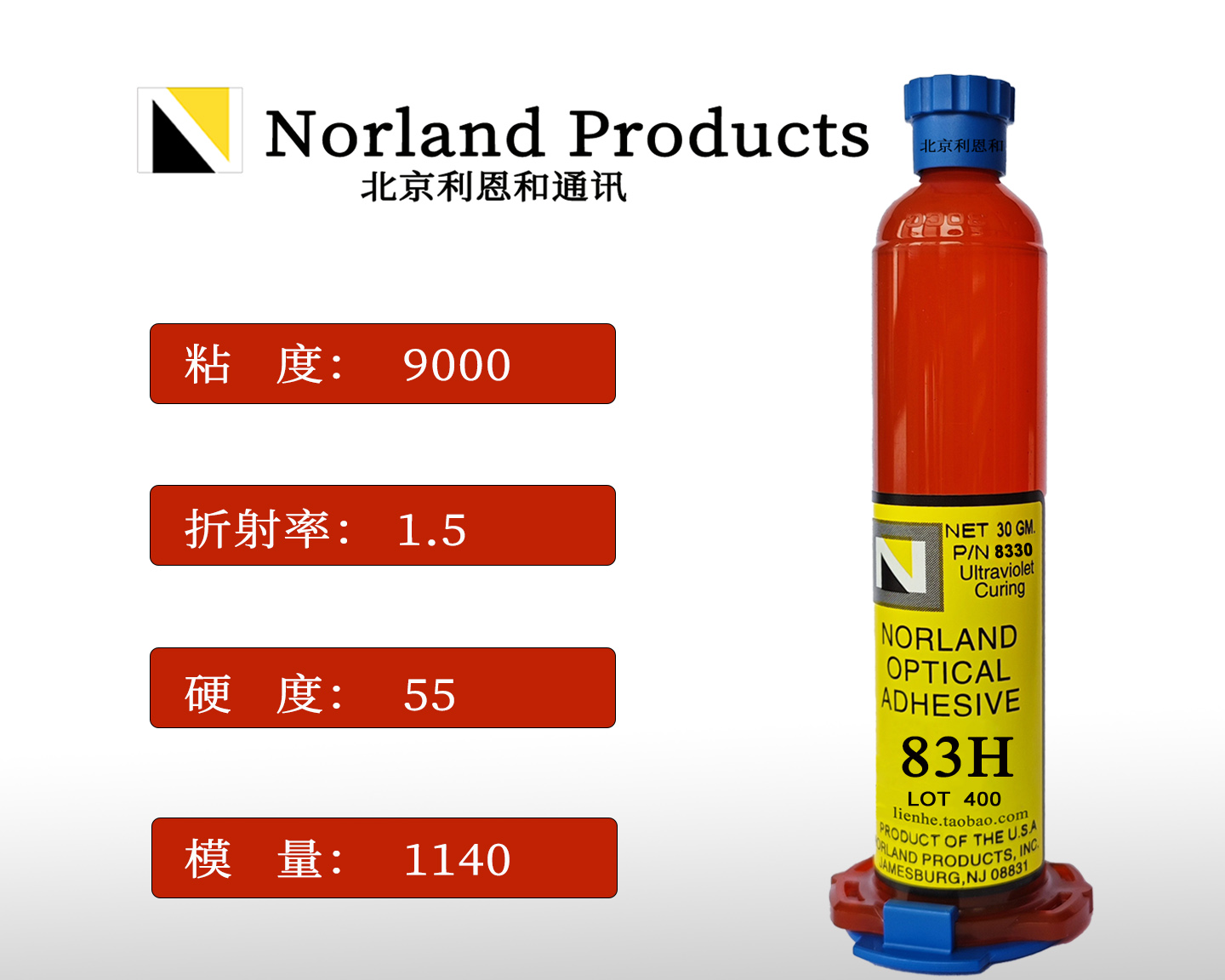
NOA83H Standard Packaging - 1-oz bottle, for laboratory and small-scale production
NOA83H is a one-component liquid photopolymer that cures under UV light, recommended for fast, effective, precise bonding of optical components. In addition to UV cure, this one-component adhesive can also be heat-cured. The outstanding feature of this adhesive is its fast cure. With the UVQ-702 UV spot lamp, thin films cure in under 10 seconds and thick films in 20 seconds. Without UV exposure, the adhesive is extremely stable. Before curing, NOA83H does not gel or clog the dispensing tip. NOA83H is highly sensitive to UV light at 320-380 nm, with peak sensitivity near 365 nm. The recommended cure dose is 2 J/cm2. Larger beads require more energy (depending on application thickness). A handheld UVQ-2 UV spot lamp is recommended for curing as it is most convenient. Besides UV cure, NOA83H contains a latent thermal catalyst that quickly cures areas not reached by UV light. Heating at 125°C for 10 minutes, or 80°C for 3 hours in a convection oven, lets the thermal catalyst cure the adhesive. Even shorter cure times are possible in an infrared oven. Unless exposed to UV light or heated to 125°C, areas exposed to air remain tacky. Below 60°C the adhesive is not activated. The advantage of this heat cure is that a partially UV-cured bond can be fully cured by heating for good physical properties. Heat cure is unnecessary if the entire adhesive is properly exposed to UV light. After cure, NOA83H forms a hard but not brittle film with slight flexibility that relieves stress from vibration or environmental temperature changes. This toughness ensures long-term performance of the cured bond. NOA83H cures from the surface downward; thicker films require UV light to penetrate the full depth, taking longer to cure. After curing, it bonds well to glass, metal, printed circuit boards, and other glass-filled plastics. Aging at room temperature for one week improves bond strength to a good level. After aging, it withstands temperatures from -150°C to +150°C. Uncured adhesive on substrates can be removed with a cloth dampened with acetone or alcohol. Cured adhesive is removed by soaking in a chlorine-based solution such as methylene chloride. Usually, if only pre-cured, bonded surfaces separate after soaking in solvent overnight. Longer times depend on the degree of cure and the area cured.
Technical Specifications:
| Solids Content | 100% |
|---|---|
| Viscosity @ 25°C | 250 cps |
| Refractive Index (cured) | 1.56 |
| Elongation at Break | 30% |
| Modulus (psi) | 160,000 |
| Tensile Strength (psi) | 3,500 |
| Hardness (Shore D) | 85 |
Light Transmission:

Storage Conditions:
Store in original containers, protected from light, at cool temperatures (5-22°C); shelf life is 4 months. If refrigerated, allow the adhesive to warm to room temperature before use. Handle this material with care; read the Safety Data Sheet and related product literature first, including those for alcohol, acetone, or methylene chloride. Avoid prolonged skin contact; wash affected areas thoroughly with soap and water. If the adhesive gets into the eyes, rinse immediately with water for 15 minutes and seek medical attention. Use in a well-ventilated area; otherwise, an organic-vapor respirator meeting NIOSH requirements is recommended.